2026 | Professional

Above and Beyond: A Waterfront Campus for Living With Rising
Entrant
Chentian Liu
Category
Innovative Architecture - Adaptive and Resilient Design for Climate Change
Client's Name
Country / Region
United States
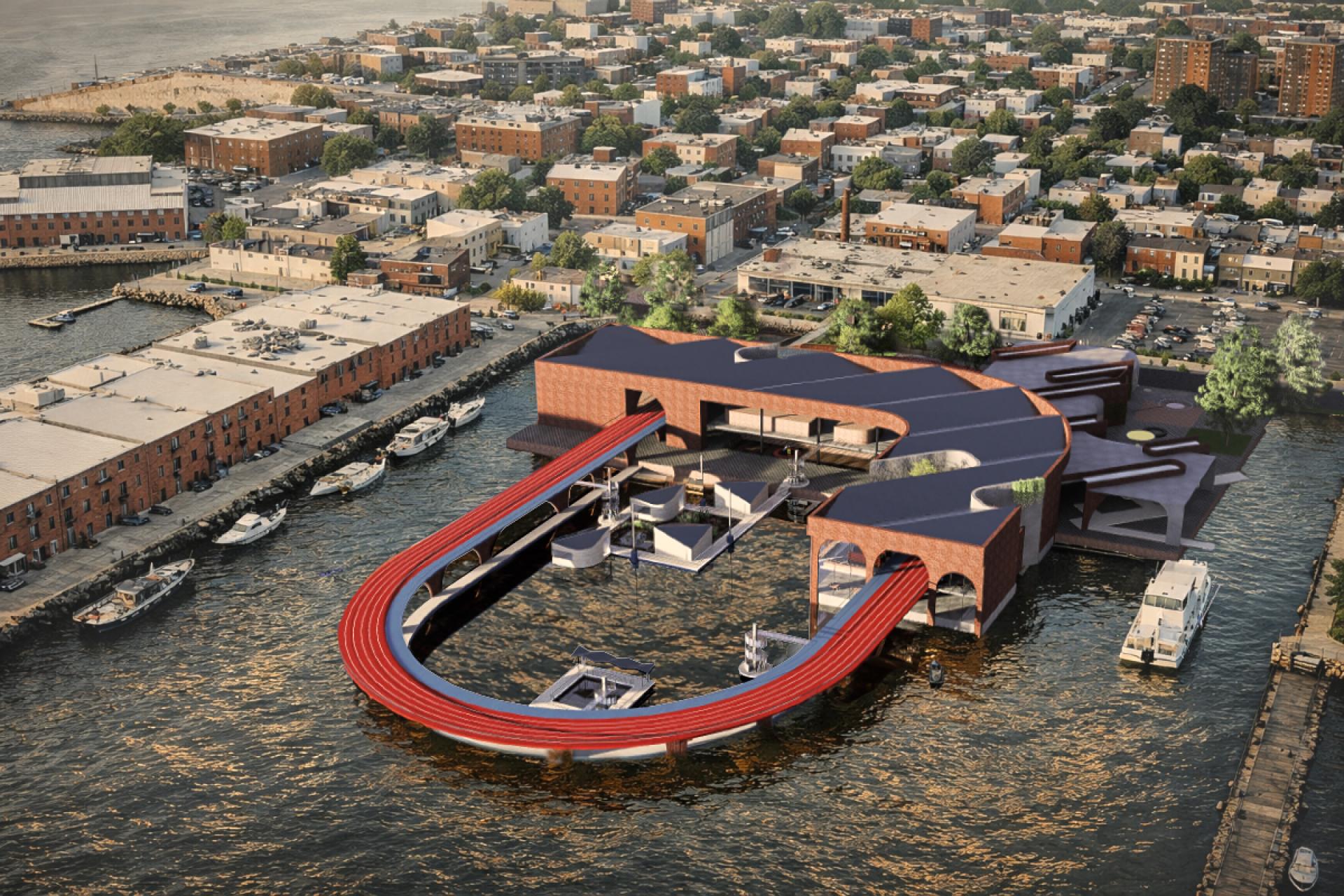
Water has always shaped human settlement. Across cultures and eras, people have been drawn to clean and abundant water sources. Yet today, rising sea levels threaten many coastal regions. The project proposes a maritime-themed middle school campus in Red Hook, Brooklyn. Located on the site of a former Amazon warehouse at Erie Basin, the campus sits outside the protection of proposed floodwalls and is therefore designed to operate within a changing water environment. The project serves both as an educational facility and as a prototype for resilient waterfront living.
Red Hook’s vulnerability to flooding is rooted in its history. The area was extensively infilled with impervious materials during the nineteenth century to support industrial development, leaving the neighborhood highly exposed to storm surges and tidal flooding. Hurricane Sandy in 2012 submerged much of the area, revealing the urgent need for new approaches to coastal resilience.
Current strategies often rely on managed retreat or large protective infrastructures. While these solutions may reduce risk, they also reinforce the divide between urban life and natural systems. This project proposes an alternative approach: embracing water as part of everyday life.
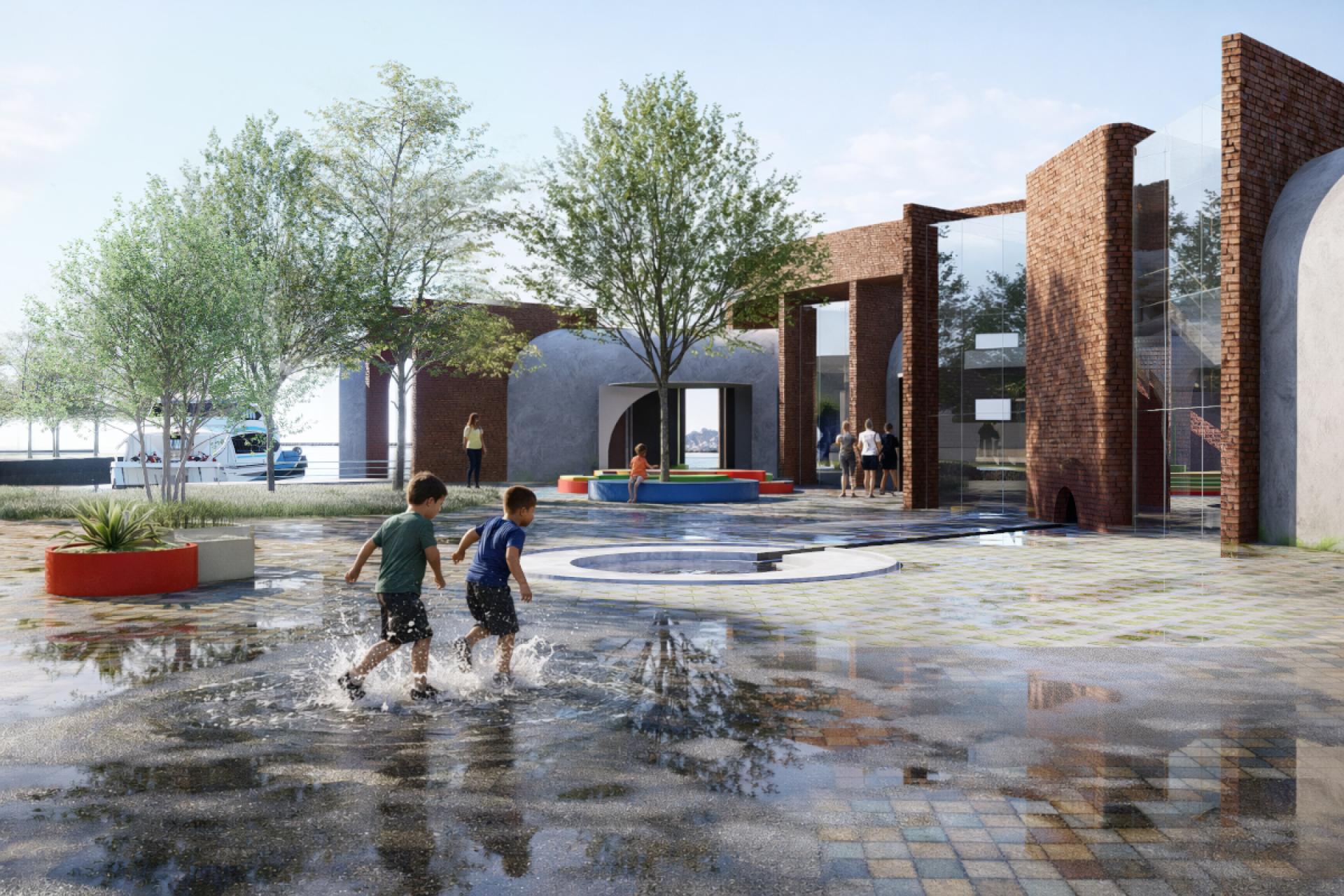
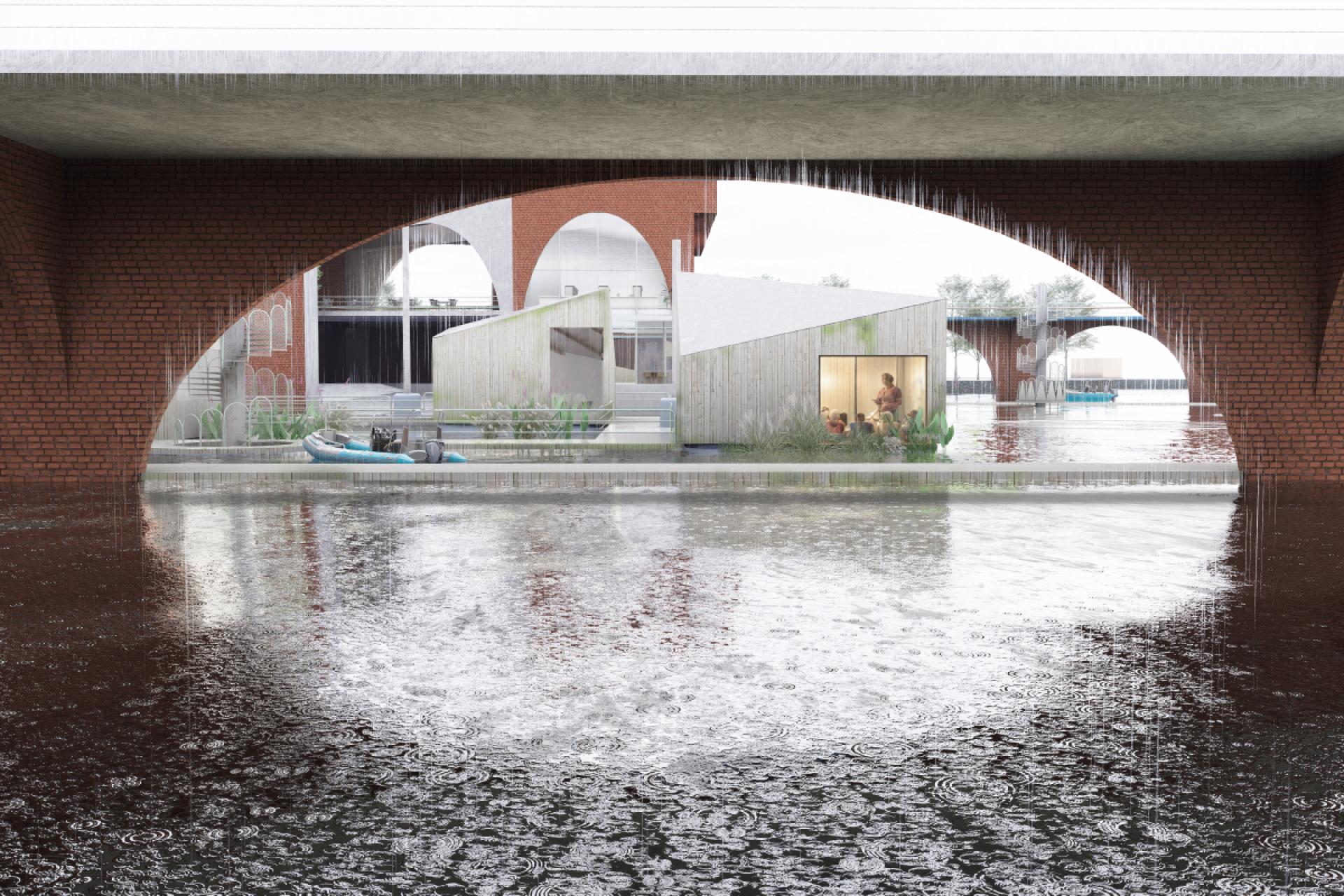
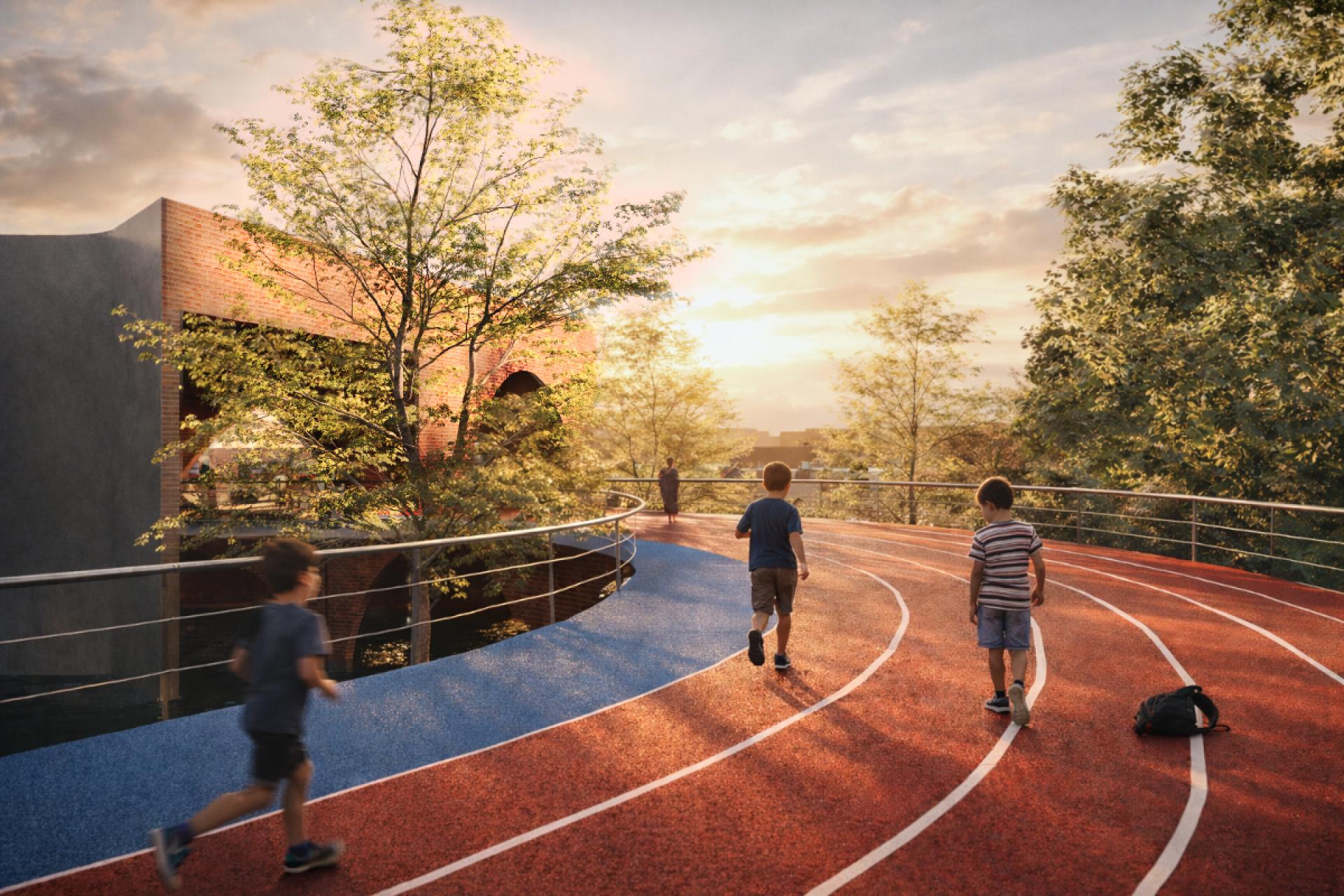
The campus integrates educational spaces, ecological research areas, and community amenities within a landscape designed to adapt to changing water levels. An elevated running track forms the primary circulation loop and protective ring of the campus. Together with stepped terrain descending toward the basin, it organizes the site into three ecological zones: protected water for aquaculture, tidal wetlands that periodically submerge, and elevated ground for classrooms and public spaces.
Buildings and programs are distributed according to their tolerance for water exposure. Some structures remain elevated above flood levels, while others float or become amphibious during high tides and storm surges. In this way, the campus continues to function during both normal conditions and extreme flooding events.
By combining education, ecological restoration, and adaptive architecture, the project transforms a vulnerable waterfront into a resilient learning environment. The campus demonstrates how coastal communities can engage with water rather than retreat from it, cultivating new ways of living with dynamic and changing landscapes.
Credits
Entrant
HZS Design Holding Company Limited
Category
Commercial Architecture - Mixed-Use Developments
Entrant
Yodezeen
Category
Commercial Architecture - Hospitality
Entrant
ENJOYDESIGN
Category
Interior Design - Commercial
Entrant
hb+a Architects
Category
Innovative Architecture - Sustainable and Green Building Technologies