2026 | Professional

Gujarat Technological University (GTU) Campus at Gandhinagar
Entrant
INI Design Studio
Category
Conceptual Design - Institutional
Client's Name
Gujarat Technological University
Country / Region
India
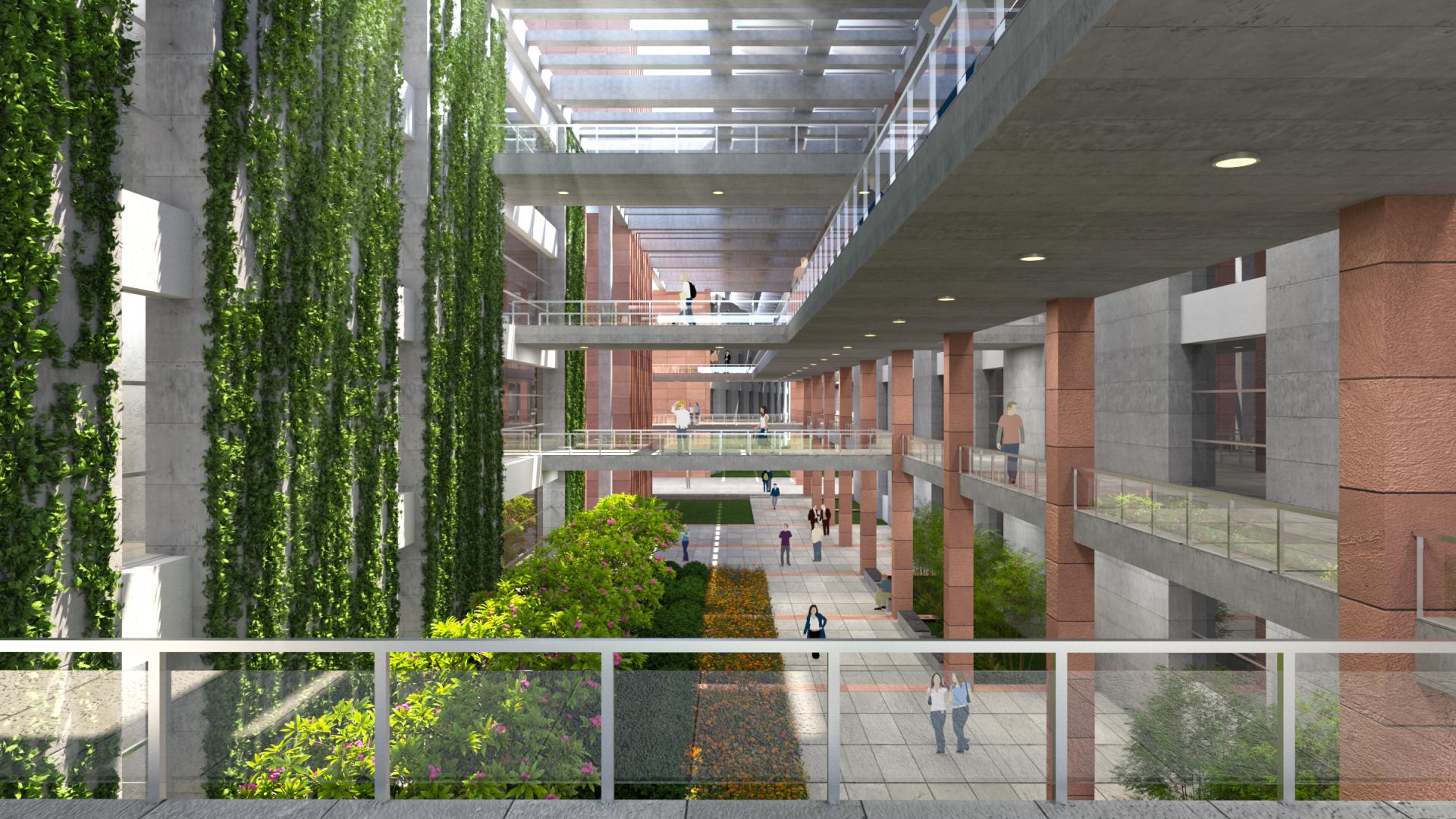
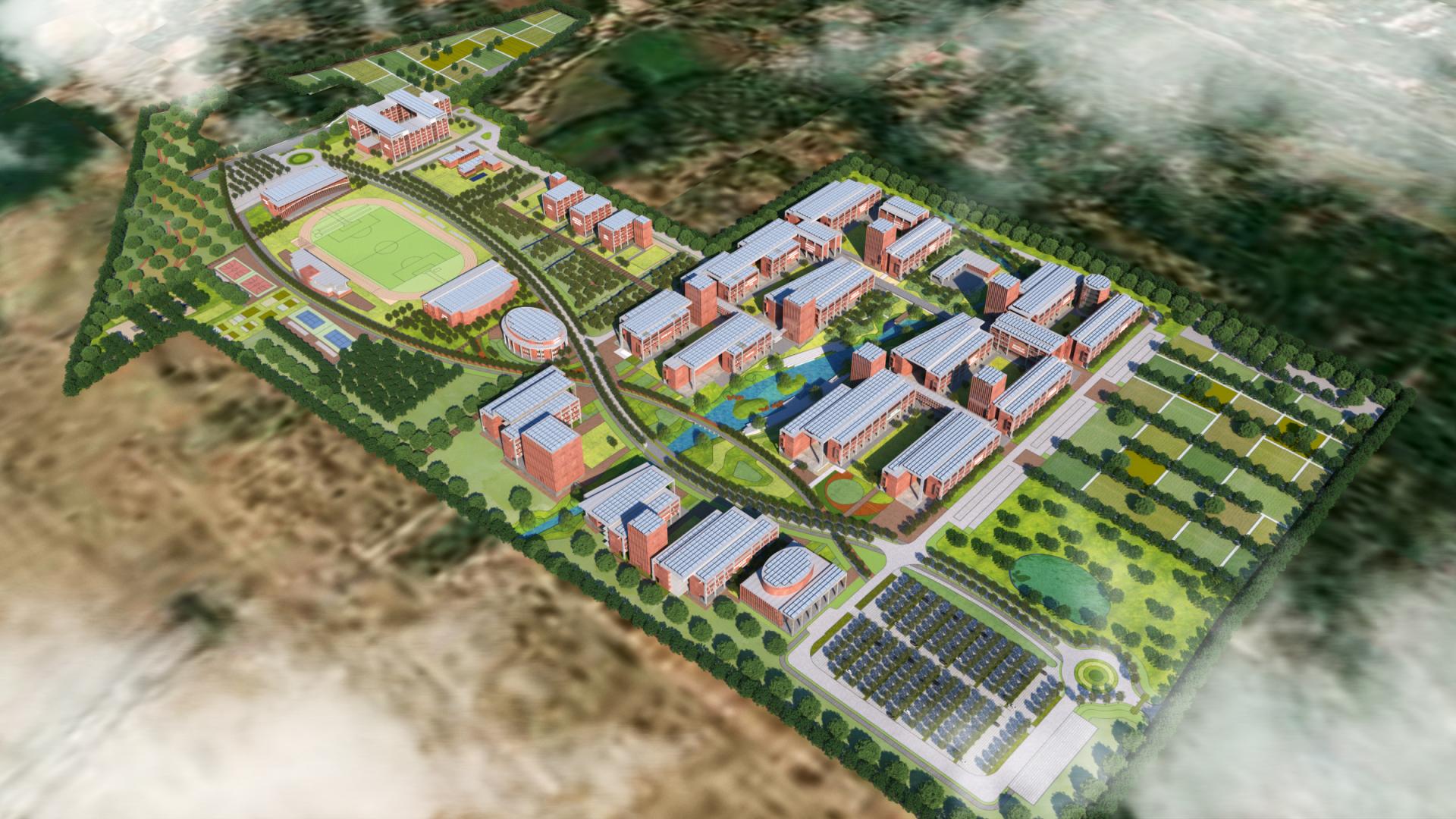
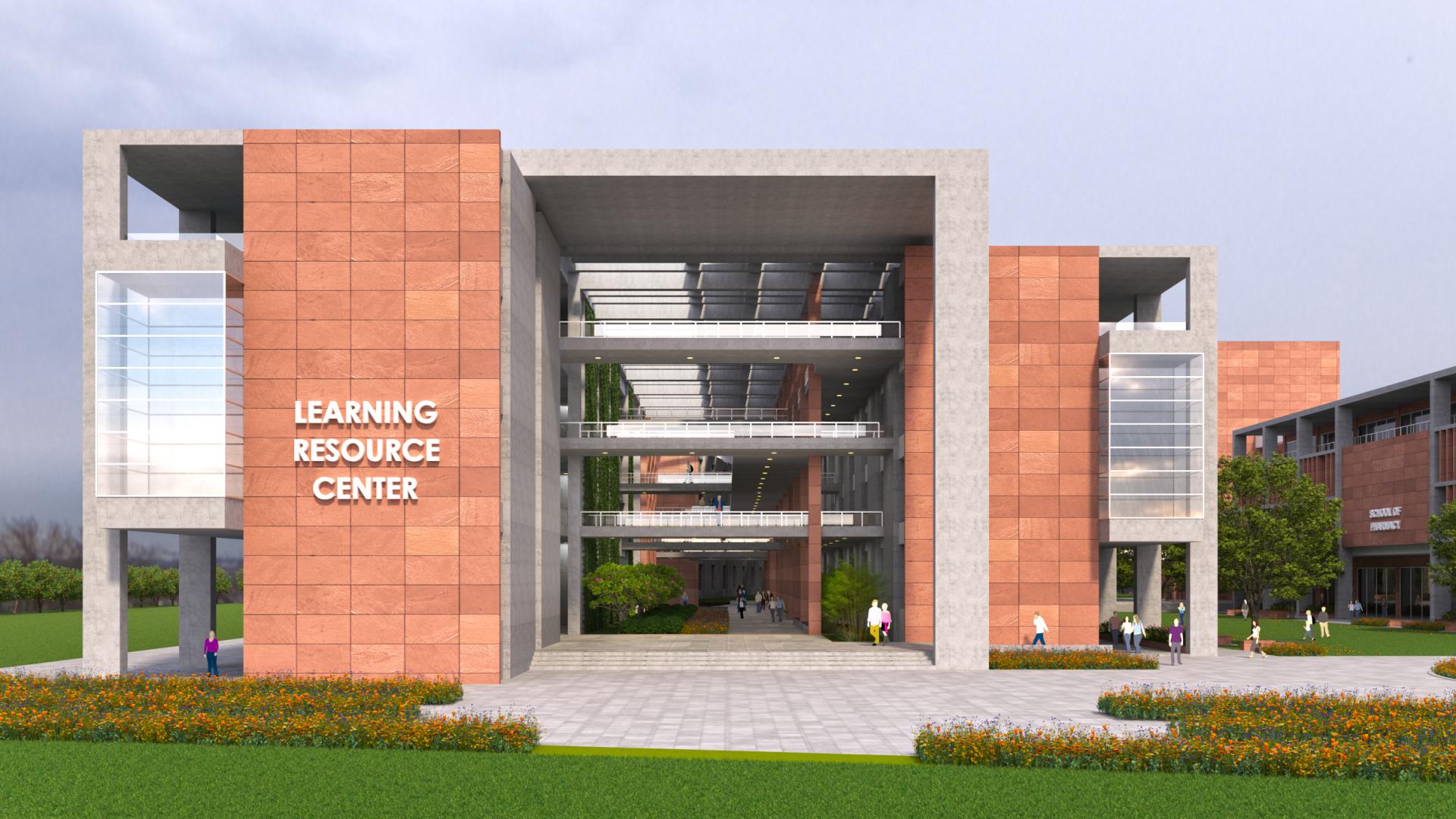
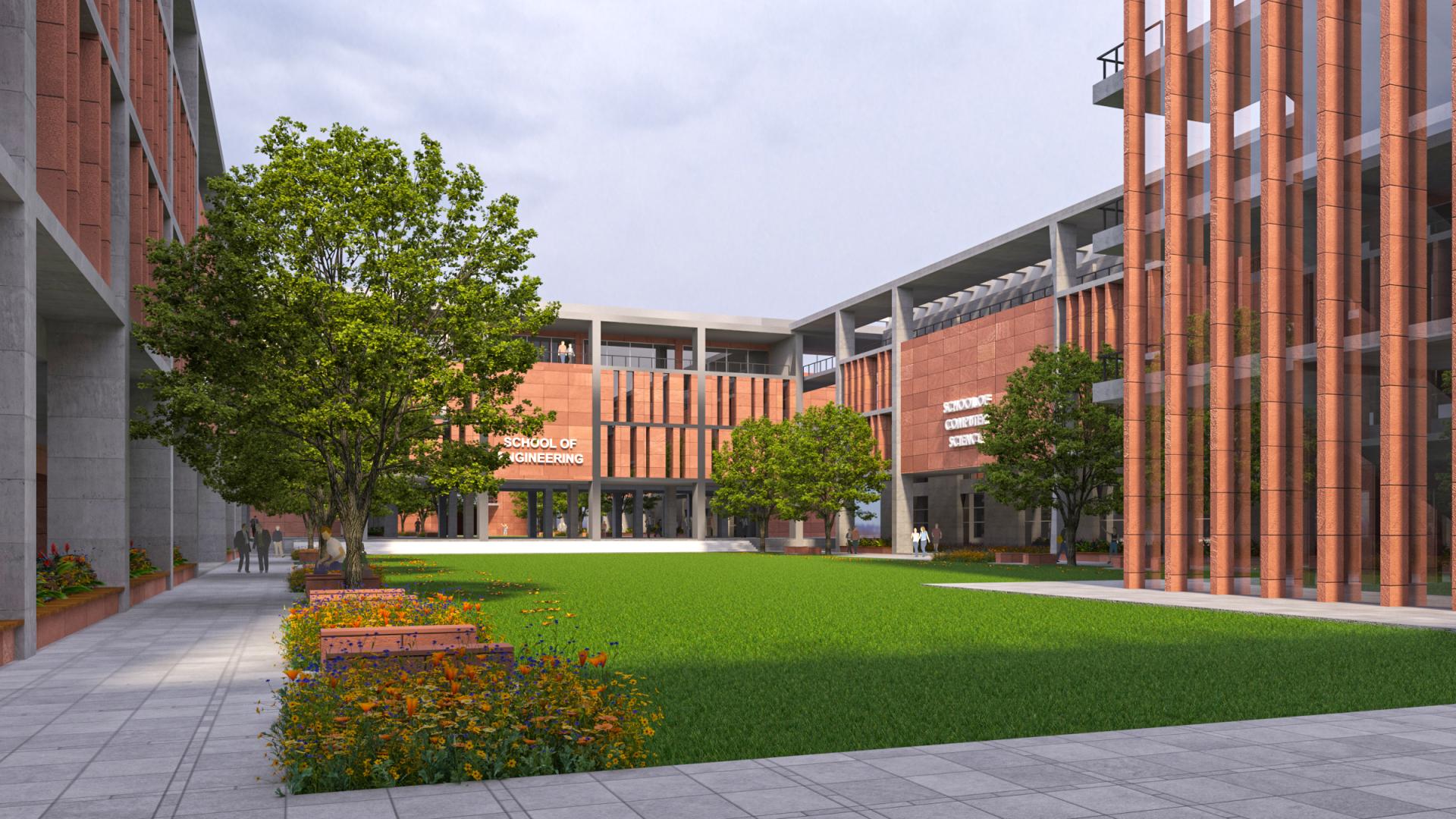
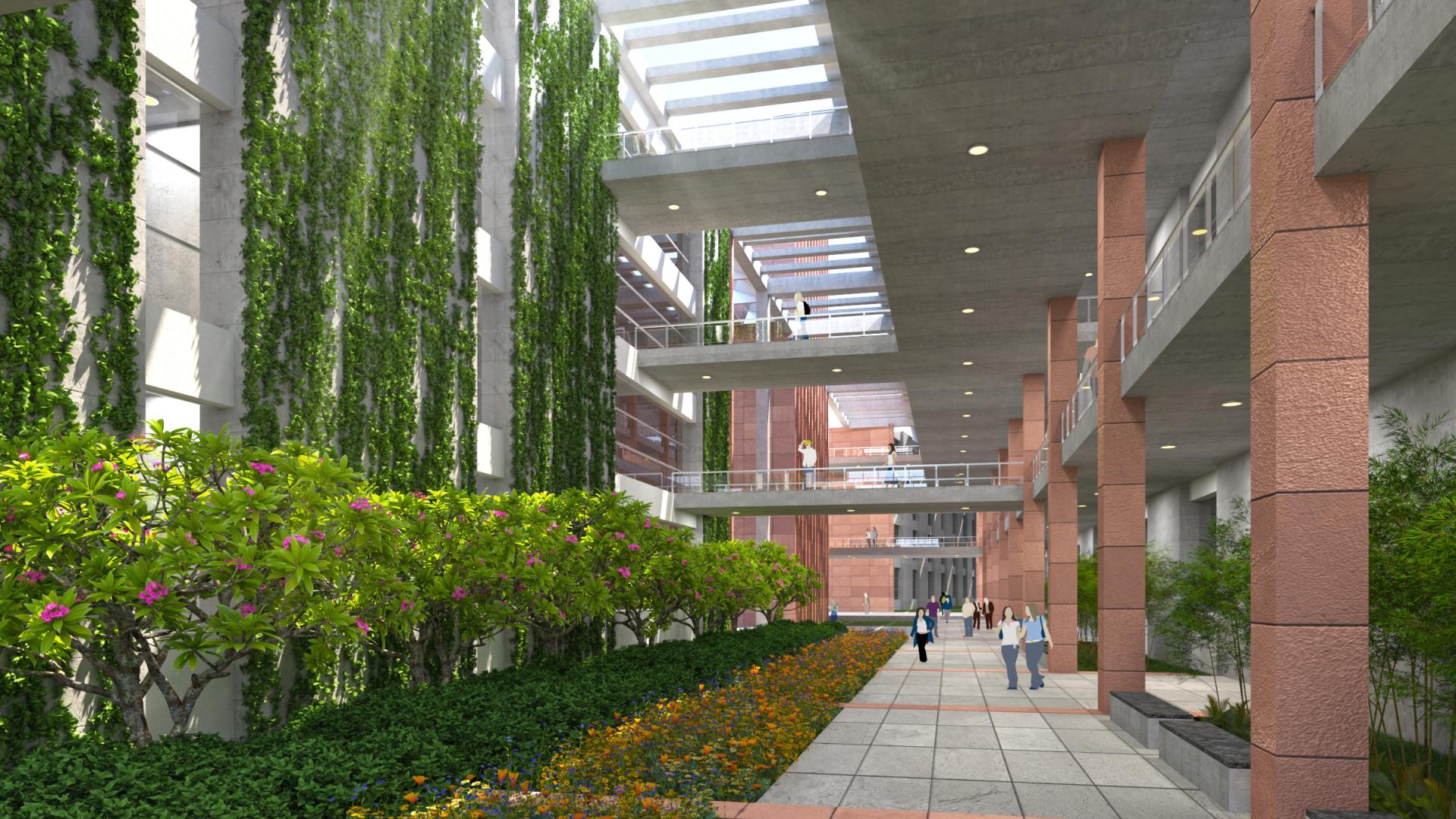
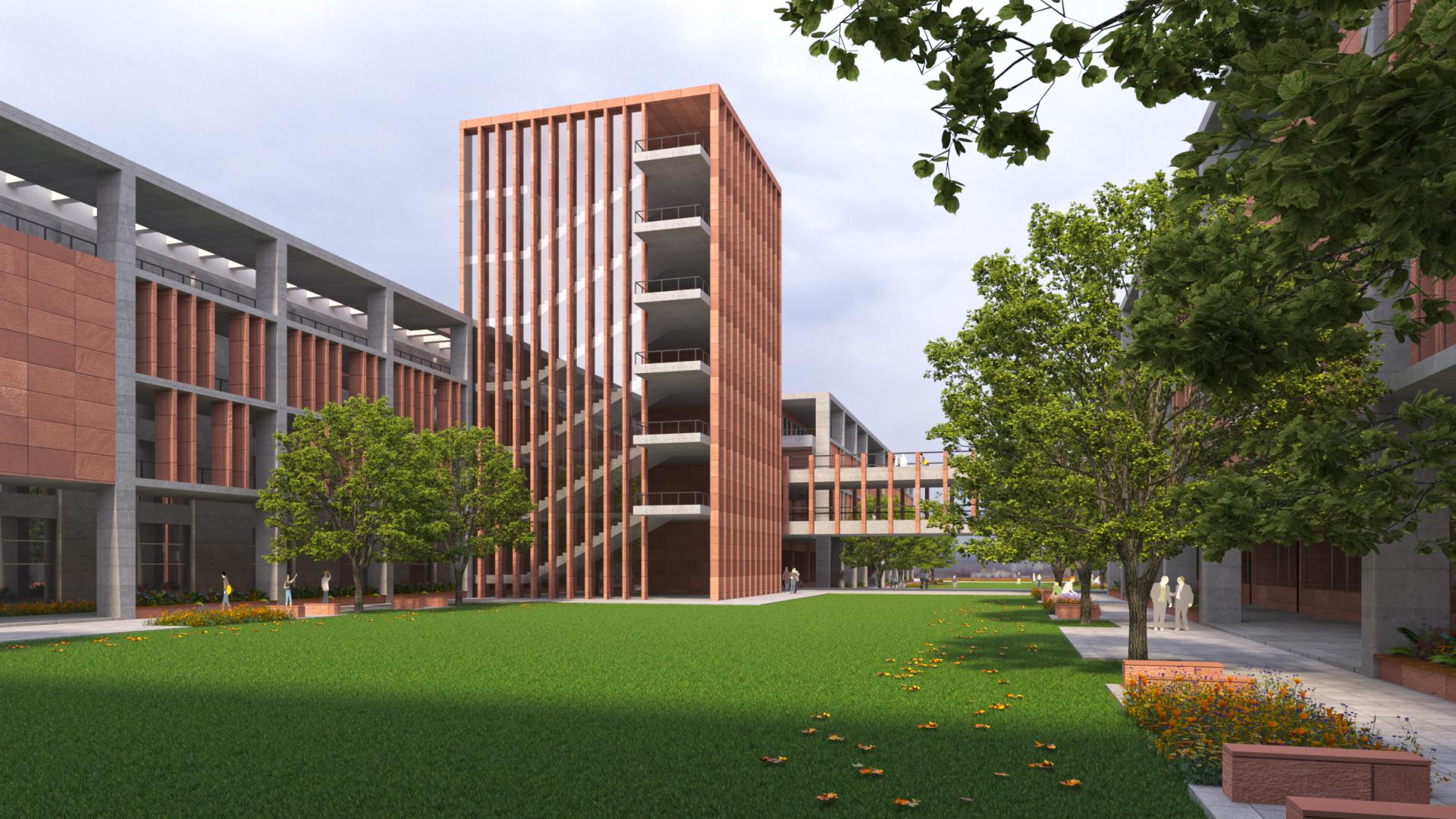
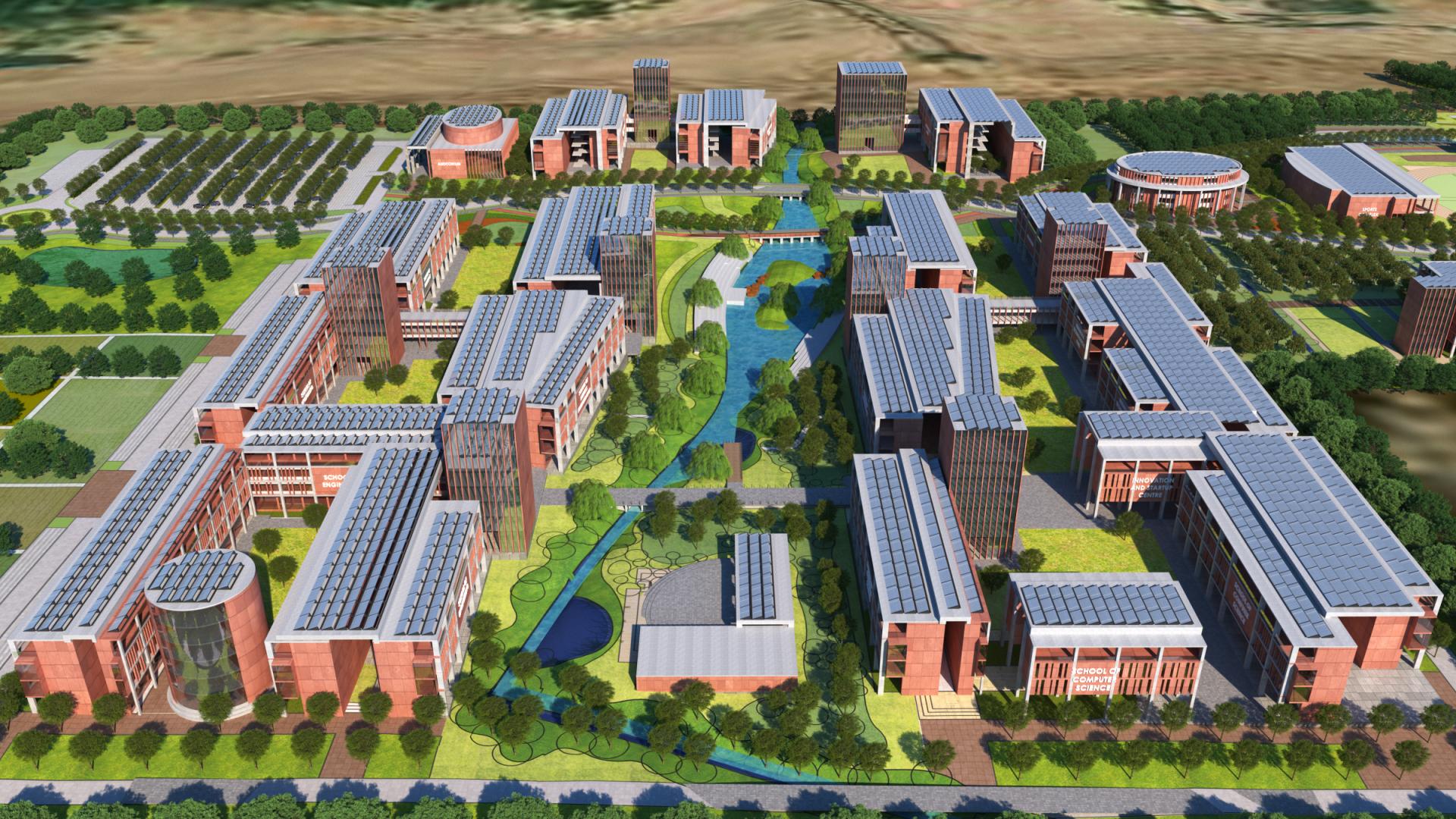
Gujarat Technological University’s 100-acre campus at Lekawada, Gandhinagar redefines the idea of a contemporary Indian university by blending ecological sensitivity, academic rigor, and sustainable urbanism. Conceived as a next-generation educational environment, the campus is structured as a compact, modular, and walkable academic ecosystem shaped by the site’s natural contours, central water channel, and proximity to Sabarmati River. The massing steps sensitively along the natural contours, ensuring minimal disturbance to the terrain and enabling the architecture to “sit lightly” on the land.
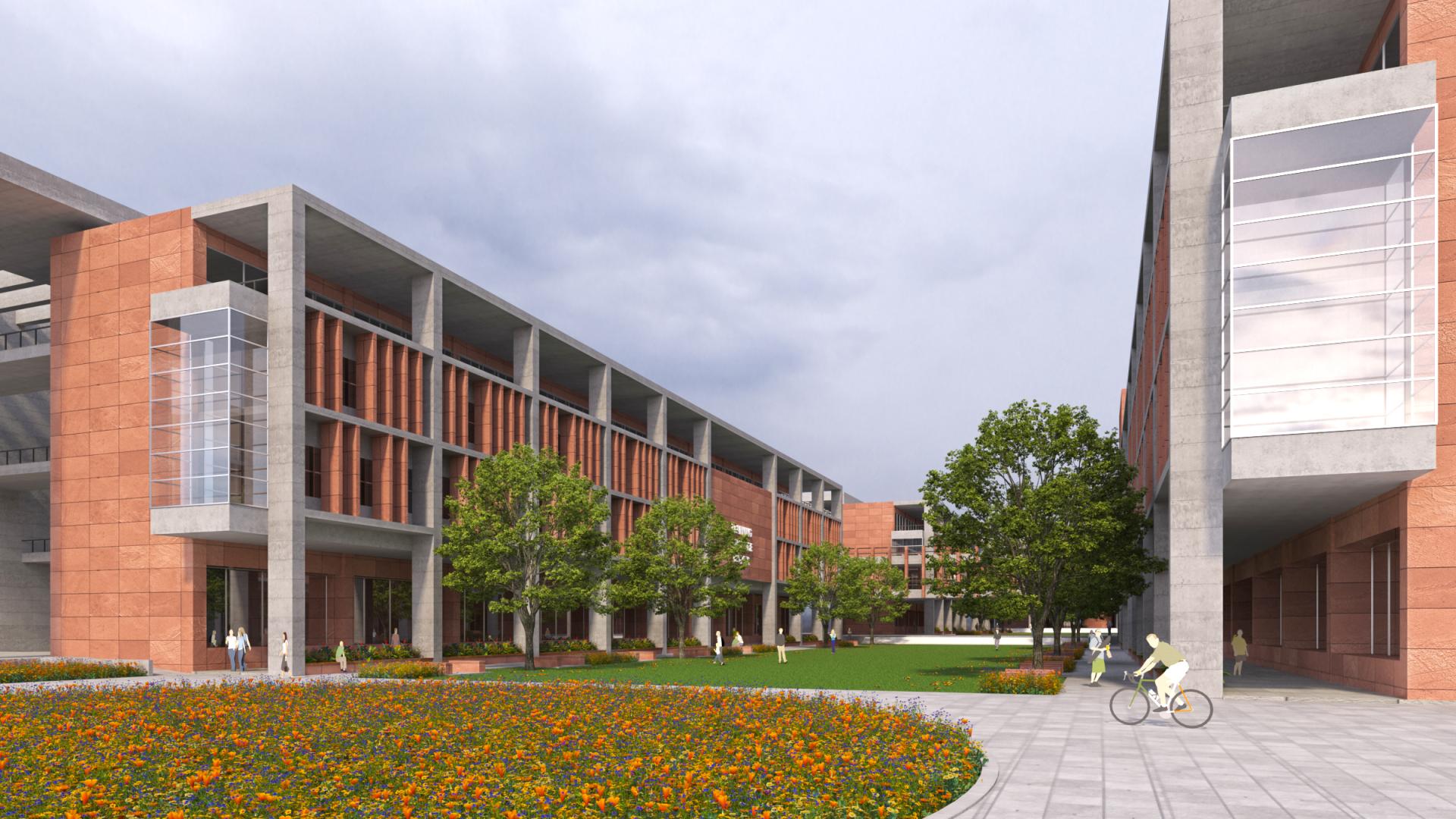
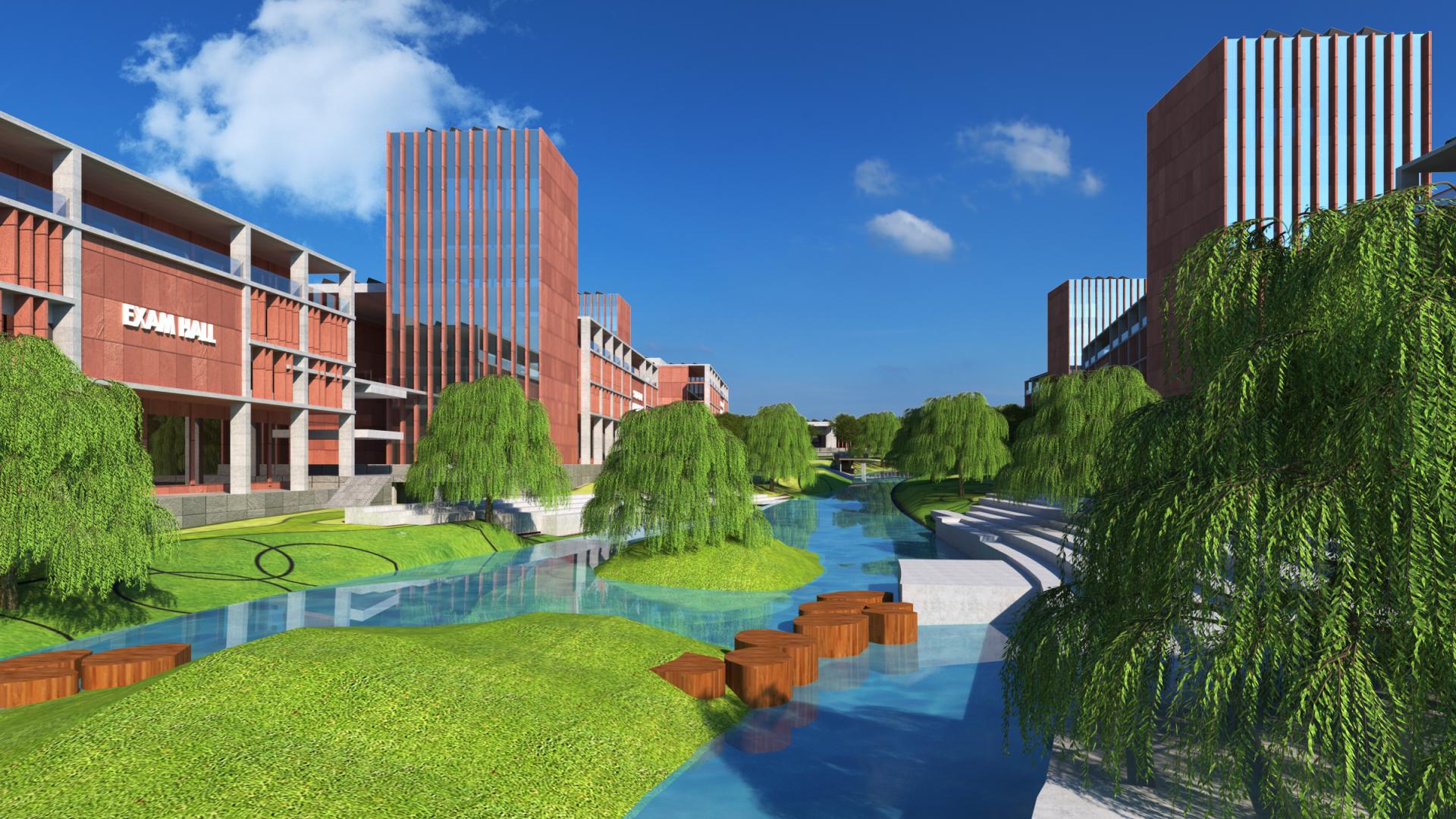
The master plan is organized through a clear hierarchy of academic, residential, recreational, and administrative zones, stitched together by a continuous central pedestrian spine. The canal becomes the defining ecological and spatial anchor around which academic blocks and learning commons are arranged, forming a series of linked quads and courtyards that encourage collaboration, interdisciplinary exchange, and an immersive student experience. Movement within the core is largely car-free, supported by dedicated cycling tracks and electric shuttle routes that promote clean, inclusive mobility.
Climate-responsive planning forms the foundation of the campus design. All major buildings are oriented along the east–west axis, enabling longer façades to face north and south. This reduces heat gain, enhances natural daylight, and minimizes dependence on mechanical cooling. The compact cluster-based form allows self-shading, creating comfortable outdoor learning environments even in peak summer.
Landscape is envisioned not merely as an aesthetic layer but as a biodiverse, self-sustaining ecological system. Existing valleys and ridges are preserved as natural drainage channels, transforming the central watercourse into a riparian green spine with reed beds, woodland clusters, mounds, stone bridges, and tree-covered islands. Native, drought-resistant tree species enrich biodiversity and reinforce long-term ecological resilience.
A defining feature is the integration of urban farming. Seasonal farm fields, fruit orchards, and medicinal gardens transform the campus into a productive landscape, promoting food literacy, environmental awareness, and community participation.
With rooftop solar installations, rainwater harvesting, groundwater recharge systems, and treated wastewater reuse, GTU is envisioned as a model green campus aligned with national sustainability frameworks. More than an academic precinct, the campus emerges as a living laboratory where environment, innovation, and education evolve together.
Credits
Entrant
tkdp | Tariq Khayyat Design Partners
Category
Residential Architecture - Urban Residential Design
Entrant
Bowery Design Group
Category
Residential Architecture - Luxury Residences
Entrant
tkdp | Tariq Khayyat Design Partners
Category
Residential Architecture - Luxury Residences
Entrant
Beijing Anyuezhai Decoration Design Co., Ltd
Category
Interior Design - Clubs (NEW)